Saturday, July 31, 2010

The Case of World vs. Betancourt

It tends to get lonely at the top. Ask Ingrid Betancourt.

Just a mere two years ago, then probably the highest-profile hostage worldwide roughly at par with house-arrested Aung San Suu Kyi in Myanmar, Betancourt was embraced and lauded as a hero by the world when, as a result of "Operation Jaque" , she and fourteen others were rescued from the hands of her kidnappers of the FARC; now, two years later, that same world is coming down full force on her for having the audacity to require the Colombian State to pay roughly six million euro in damages to her and her family for the time she was held in captivity and for failing to protect her as a presidential candidate in 2002.

Let's get it over with: we all make some miscalculations in life and this is one truly seems epic in it's dimension, unless the implicit aim of Mrs. Betancourts' action was to commit political suicide in her homecountry, where in fact there was some speculation that after her release she might have another go at the presidency. I also find it hard to blame the Colombians that are now spitting her out because of her perceived ingratitude and hostility towards the government and army that saved her. Colombians have seen a lot of bad things happening in their scarred country and pity on a person of her standing, asking for money, is in rare supply. It's hard to judge her otherwise ... or is it ?

From a personal perspective, I wouldn't want to be in a position where I would have to judge someone who has been robbed of her liberty and dignity for a full six years, who has been tied to trees, humiliated and beaten. I invite anyone who has not gone through such an ordeal to step forward and explain how it feels and what it does to a person. Good luck to you and may the sound of my scorn be with you forever after. Therefore, more than by her claim, I am shocked by the mass of comments on newsreports that have been posted on the internet (such as here) and that are screaming murder, calling her a villain, suggesting she be returned into the hands of her FARC captors or worse ... by people who probably show signs of nervous breakdown when their computer is not responding within ten milliseconds after pushing a button.

Very revealing in many of the reports is also what is not being said, often more than what is being said and in which most of  the reports just echo each other.

I see two fundamental questions in this whole debate. First is whether Ingrid Betancourt, yes or no, as a Colombian citizen has the right to seek damage repair for what she suffered. Second is whether her claim that she was not sufficiently protected by the government when she was kidnapped makes sense or not. It needs to be said that I have never been any closer to Colombia than at a five-thousand miles distance, that I neither speak nor read Spanish, that I haven't studied the history and developed only very recently an interest in this amazingly disturbing country. Yet I still would like to voice my opinion based on the reports I have read and the reactions I have seen.

Let's start with the second issue. What happened on that 23rd of February 2002 ? Ingrid was running for president (admittedly as one of the lesser candidates for the "Oxygen Green"-Party) and had decided she wanted to visit San Vicente del Caguan  . This village was in the middle of what had been, till a few days before her arrival in the area, a so-called Demilitarized Zone (DMZ) where the Colombian government, then headed by president Andres Pastrana, was meeting with the leaders of the marxist FARC rebels to try to negotiate a peace agreement. Officially, in the DMZ there was a truce (reality seems to have sometimes been quite different). These negotiations, which had been going on at intervals over a period of almost three years, in the end didn't go anywhere and made president Pastrana decide to re-militarize the DMZ. This was what was happening when Ingrid Betancourt's campaign trail crossed the area, and as a result of the president's initiative, fighting in the area was flaring up again.

Several people in the military have laid down witness to the fact that several attempts were made to warn Ingrid to not enter the area because it was too dangerous. Strangely, what is missing in most of the articles that I have seen on the Web, is that the Mayor of San Vicente del Caguan, where most of the peace talks between the government and the FARC had taken place, was a member of the "Oxygen Green"-Party and, according to Wikipedia (the only source I found sofar that is mentioning this), at the time the only elected official of that Party in the entire country. So let me try to picture this: there is this town where for a prolonged period of time people from the highest government levels have been trying, through talks with the rebel factions, to make Colombia as a whole a safer place; this town, which has been the centerpoint of these discussions (to which Ingrid Betancourt at occasions had been part), is presided over by a fellow partymember of Ingrid ... and people would question why, on a campaign where she's aiming for the presidency of Colombia, she would want to go there ??? Either my information is not correct, or someone must be kidding me ...

The story could be even more interesting, though also this fact is only hinted at in very few of the articles I have read. It seems that at the time Pastrana himself was flying into San Vicente del Caguan, that Ingrid had asked him to hitch a ride on his plane and that the president refused because he had refused two other requests of other candidates before her. From a Pastrana perspective, I am not saying I can not understand that decision. For him, it might have been a matter of fair-play: either everybody or no-one. I have absolutely no view so far on the personal relation between these two politicians, and whether that might have played a role in denying Betancourt's request. What I do know is that for me Ingrid Betancourt had a legitimate reason to want to go to that place. One of the commenters, under the name Juancho Colmenares, on the excellent blog "Colombia Reports" (to which I am much indebted for writing this article) voices what I was thinking when digging into this story in a pretty accurate and colourful way:

If a man would do the same thing Ingrid did, it would be said that he is “macho” that he has “cojones” that he has his pants “well belted” that he is strong that he is an example of firm will

I think he is right. Let's compare for a moment to the previous US presidential election . What was McCain doing in Iraq during the campaign ? Had the GPS system on his bus gone bust ? Had he any voters over there to convince ? Could he have any impact on the situation there ? Don't think so. I bet the official explanation was that, as a candidate running for president, it was necessary to get in touch with the issues he would be facing as a president if he ever were to be elected and that it had to be done on the ground, instead of having a video-conference from Washington with the generals leading the operations in Iraq at that time. Truth is: seeing a guy walk a (suggested) mine-field without a bullet-proof vest (never mind the one hundred soldiers, the three Blackhawks and 2 Apache gunships that, unfortunately, didn't fit in the frame of the camera) is a great photo-op and is very, very macho. Cojones, yes. I didn't hear too much clamor about McCain's visit and never mind the money that must have been spent to get the guy there in conditions safe enough to make that bulletproof vest obsolete.

I wouldn't want to underestimate Ingrid Betancourt's ego. From what I've been reading in some comments, it seems it would almost require Saint-Peter's cathedral to fit in. I don't know, I haven't met the lady. Yet I believe she had a point in wanting to go and be at San Vicente at that time. She had only one "beacon" of her Party in the entire country to refer to and with the re-militarization of the area, life over there was bound to become much more unpleasant again. She had the right -I'll stop short from saying "the duty"- in my eyes to go and support the Mayor (and the citizens) of San Vicente del Cagaun  and tell them that with her as a president they wouldn't be forgotten and they would be taken care of. Yet the right to do that under as safe conditions as possible (meaning, by plane or helicopter) is her denied. She insists, notwithstanding the multiple warnings, and attempts to drive there by car, accompanied by her campaign manager Clara Rojas and some other people. About thirty miles into the danger zone, she gets stopped at a roadblock set up by the FARC, they recognize her and she and Clara get driven off into the jungle ... from where she won't emerge for another six years, thanks to  a risky operation set up by the government and the army: let me by all means not fail to stress that point again.

Based on this course of events, I think any government could at least take the trouble to do some introspection and consider whether it had done enough to protect the safety of anyone who was in the race to become the next president of Colombia. Sure, Ingrid Betancourt must have been aware of the danger in entering that area, but what I'm wondering is whether the situation there was really so much worse than in the rest of pre-Uribe Colombia (Alvaro Uribe Velez won the elections in 2002 and in the next eight years managed to make the country a much safer place). What is the image you are projecting when you fail to stand by your people who are in the crossfire ? Politics is a hard-ball game and it is played dirty. Ingrid, I have no doubt, had in the first place her own presidential cause in mind when she forged forward with her plan but I am sure any politician, worthy of that name, would have tried the same had he been in her shoes.

And then there is the other side to look at this: if the zone around San Vicente was really dangerous to the extent that no guarantee could be given that one would get out unharmed, wasn't it then the responsibility of those in charge to simply prohibit anyone from entering there? Under such circumstances, anyone, be it commoner or presidential candidate, is just a liability to those who have to manage the conflict on the ground.

No matter where Betancourt's claim might have gone had she not chosen to retract it of her own, it might be good for the government to at least spend a few moments on the question whether there is not some rationale in the claim and what should be done to avoid it from happening again. For this is not just Ingrid Betancourt's problem: it is one person turning into a colossal PR problem for the entire country for years on a row, as the world is watching and scratching it's head about how the hell in country C a presidential candidate can go missing for such a long time. And honey, shall we take the kids and spend our next holiday over there ? Naaah, don't think so, darling ... maybe in twenty years or so.

Now coming back to the first issue, whether Betancourt has the right, in a legal sense, to claim damages for her suffering. Interesting point again is that most of the articles seem to indicate that she had sued the State. Technically she didn't do that: she tried, through conciliation, to settle outside the Court. If her conciliation request would have resulted in a rejection, the next step could have been bringing a lawsuit against the State to Court, but as we know now, matters will never get to that point, as she retracted her claim. Being anything but an expert on Colombia and it's institutions myself, it is hard to judge whether, hypothetically speaking, her claim would have stood any chance. From what I read, the country has in place a victims law, which allows victims of illegal armed groups to claim reparation by the State. The government indeed seems to have paid repairs already in the past to kidnap victims who were considered to have not been adequately protected by the authorities.

The broader question is of course whether the government can be held liable for misdeeds it didn't commit. I would be inclined to answer no, but I certainly would not go as far as to turn down the responsibility towards the victims entirely. On an even broader level, I believe the society as a whole has a responsibility towards these victims, for an army of some ten thousand rebels can not continue to wreak havoc on an entire country of over forty million people -for decades now already- if that society is united in it's will to rid itself of them. I see it as the government's job to guide and steer society in such a direction that it will unconditionally cooperate to smoke out those festering elements, failing of which to reach such a result in the short term, as a stopgap solution it should try to repair as much as possible the harm done to whichever victim seeks it's help. The funds to do that could be organized as are the welfare and pension funds in most developed countries, meaning based on the solidarity-principle: the healthy contribute for the sick, the young for the old and when you get old yourself, you know someone of the new generation is paying to take care of you. That might rid us of this hypocritical cry that echoes from everywhere in those comments I've been reading: "Why should we pay for her with the tax-payers' money ?" Well, for one reason, because in a country like Colombia where the shadow of FARC, paramilitaries and narco-gangs still looms large, you could be next.

So was Betancourt's claim justified ? I think it was. Was it outrageous ? Probably. She admitted readily to that herself. But it would have been in the interest of everyone to have the proper institutions deal with her claim and either bring it down to reasonable proportions (but in this context, what is reasonable ? How much money is six lost years of your life worth ? Just for comparison reasons: I would be very interested to learn how much Brangelina are suing that magazine for that wrote they are discussing divorce. I think saying that we're possibly in the same order of magnitude might not be very far off the mark) or dismiss the request altogether based on such and such reasons strongly funded in the Law and constitutional rights.

By unilaterally retracting her claim when the voices of protest started shouting at her, Ingrid Betancourt may have done her fellow citizens that are still in captivity or will fall into rebel hands in the future, a great disservice, for the message has just gone out now that it is bad, outrageous even, to even dare to ask for compensation. Where the democractic instutions seem to have done a perfect job in preventing outgoing president Uribe to run for a third term (which would have been in violation of the Constitution) and thus allowed a (generally speaking) fair election process to take place, they seem to have failed in this case, silenced by the vox populi.

The morals of Ingrid Betancourt's action towards her saviors in the face of the massive effort and risk undertaken to restore her to freedom, may be questionable, but so is any effort that was taken to prevent this case from taking it's natural legal course through the appropriate institutions.

Pity. Really pity.

Sincerely Yours,

Wednesday, February 17, 2010

Don't you know, they're talkin 'bout a revolution, it sounds like a ... tweet *

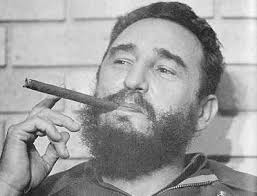
It used to be like this: you would start in a far-away place, in exile from your own country, gather 80 something people in a boat which was so old it's name was "Granma", sail back to your country, where your group almost immediately got decimated upon arrival till there were only a couple of you left and then start a guerrilla fight from the mountains, as result of which, a couple of years after your return, the dictator you were after  had to flee the country and you could declare yourself a successful revolutionary hero and continue working on getting famous by smoking big cigars.

Or you could go for the scenario where you set up a Party that is not especially popular with those in command, get squeezed into an area where you're about to get smoked out like rabbits and from which you manage an escape by means of a long march which costs the life of thousands of your followers, only to settle in the end with the survivors in a place where you live in grottoes dug out from the mountains and from where you start to charm the peasants in the neighborhood, pick a small fight with the reigning nationalists, pick some more fights, a bit further away from your grottoes and helped by those peasants which you charmed by not taking their food and not raping their women, after which you join those nationalists because they need you to help them fight some japanese scum but once you've "been there, done that", you just beat those same old nationalists and finally march victorious on the capital ... where you declare yourself a successful revolutionary hero and continue working on creating one disaster after another from there onwards.

Today, things move a bit different. The starting point is basically still the same: at the top, there's someone you don't like and who you want to go, or there's a cause who you think will go nowhere without your support. The means to reach your goal, however, are slightly different from the past practices. Since it doesn't help your cause to get your head chopped off the moment you set foot on enemy land, and walking for thousands of miles to get out of jeopardy is neither high on your agenda, so you take out your cellphone and you send ... a tweet. Viva La Revolucion !

The last couple of weeks have brought another example of this new revolutionary model. One of the major topics on Twitter was the hashtag #freevenezuela, pointing to an outpouring of dissatisfaction in the country with Hugo Chavez' closing down of several television- and radiostations, critical of his government, and his reigning in of freedom of expression in general. With the Venezuelan economy still in dire straits and not likely to recover significantly anytime soon, El Presidente is trying to turn attention away from the real problems, for instance by picking yet another fight with neighbour Colombia, but it seems many of his compatriots don't like to be fooled no longer and they are massively engaging in twittering their frustration. One could say: well let them, if that takes the steam off the kettle, there's worse things to have to deal with, but Chavez sure didn't see it that way: he saw fit to condemn Twitter as a "tool of terror" and saw the need of "eliminating terrorist threats posed by social networks".

He's not the only one freaking out over messages of maximum 140 characters. When elections were held last year in Iran, re-elected president Mahmoud Ahmadinejad felt the tweeting heat coming right at him, with massive street protests as a consequence and when the Uighurs in China's Xinjiang Autonomous Region started to vent their frustration over the treatment of their (islamic) minority by the majority of Han Chinese, one of the first sites to not survive the voracious appetite of the Great Chinese Firewall sure enough was Twitter (followed by an almost complete shutdown of the internet in the restive province).

Throughout history we have seen the power of words being used by the literate, sometimes in name of the oppressed, sometimes in their own name and being dreaded by the ones in power. But as is explained in this video, what we had in the past was a one-to-one sort of conversation, or, in the case of broadcast, a one-to-many type of conversation. What Twitter and the other social media are bringing us at the beginning of this new century is the many-to-many conversation that is no longer mainly driven by professionals but by amateurs, that is ubiquitous and that is fast. Examples from the same TED-talk: last time China had an earthquake the size of the one we saw last year ravaging part of Sichuan Province (i.e. the earthquake that swept away the town of Tangshan in 1976), it took the government three months to admit to the scope of the disaster. Now there were people taking pictures of buildings collapsing, sending tweets as things were happening and it was via Twitter that the BBC became aware of the quake, quite before the US Geological Survey website had anything online.

It's the speed and the ubiquity of these media that gets world-leaders with a less than clear conscience going berserk over it. It's the rallying power of these media that now starts off revolutions: the technology resembles the guerrila tactics of the past -an individual engaging in an act of "insubordination" against the organisation he's fighting by sending a message opposing that organization and making others aware- but when you look at the turn-out of the masses in Iran, in Xinjiang, Tibet, the convening of the forces progresses at such a speed that not to take heed when it is directed against you, would be ... well ... unwise, to say the least.

It's too early to tell where this new evolution may lead us, whether the obvious benefits it may have in bringing to the surface the abuses of power that happen worldwide will outweigh the dangers of having a whole mass of amateurs taking the driver's seat, but at least for now, it may bring a new voice to those that have remained unheard. 

Sincerely Yours.

* Free adaptation from Tracy Chapman's "Talkin' about a Revolution"

Tuesday, February 09, 2010

"Burn it Blue": some thoughts on Frida Kahlo

There's two movies I will always remember, both for the same reasons: the colors and the music.

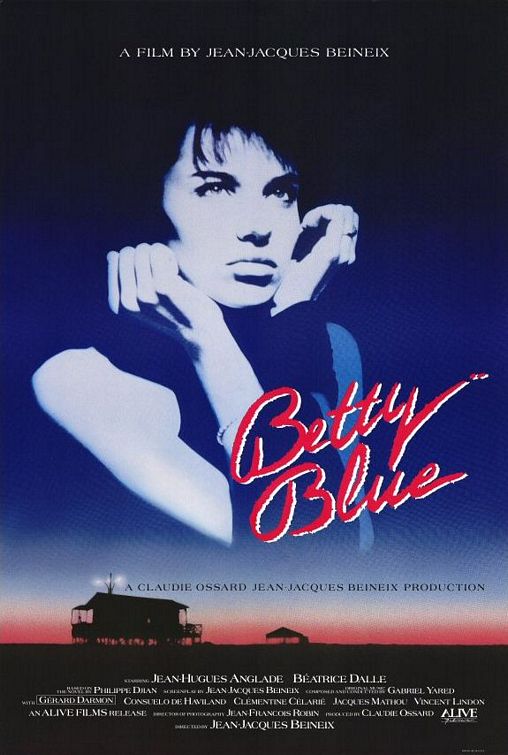
The first one is "37°2 Le Matin", also known as "Betty Blue", a movie by French director Jean-Jacques Beineix, about spare-time writer Zorg, who happens to meet Betty. The young lady is so enchanted by the scribblings from Zorg that her only concern  from then onwards is to get them published, leading to her insanity when that turns out to be more difficult than planned. The scenes where the couple meet and set out to start painting holiday bungalows on a beach, in pink and blue, are among the most amazing views I have ever come across in cinema. Those are scenes you don't forget, only by virtue of the colors and the rather fantastic minimalist score of Gabriel Yared.

The second one is "Frida", directed by Julie Taymor and starring Salma Hayek, about the life of Mexican artist Frida Kahlo. A significant part of her life she spent in the "Casa Azul", the house where she lived and which is a museum dedicated to the artist now. The vibrant blue, red and green colours of the house, like the colours of Kahlo's paintings, seem to splatter off the screen and watching it while listening to the grandiose wrinkled voice of Chavela Vargas in "La Llorona" or Caetano Veloso in "Burn it Blue" is another cinematic experience I'm not likely to forget anytime soon. And because of the movie, I got interested in this woman, who at times seemed to combine the superhuman with the everyday, down-to-earth normal human ...

So a couple of weeks ago I was happy to find, in a bookstore nearby, this little pocket book by French Nobel laureate Jean-Marie Gustave Le Clézio "Diego and Frida" ("Diego et Frida" (1993) published by Gallimard, "Folio", "Editions Flammarion", Paris), which details out the life and times of Frida Kahlo and focuses in particular on her stormy relationship with her just as notorious husband, Mexican revolutionary muralist Diego Rivera. It's near to impossible to not be touched by the story of Frida and Diego as it is laid out in the book, so I guess next I will be looking for the official biography of Frida Kahlo by Hayden Herrera (on which book the script of the movie was based), but while doing some further browsing on the web, I found this quote from Diego Rivera which struck me:

"Frida is the only example in the history of art of an artist who tore open her chest and heart to reveal the biological truth of her feelings. The only woman who has expressed in her work an art of the feelings, functions and creative power of woman".

When one isn't familiar with the sort of paintings Frida Kahlo produced, this may sound a bit over the top, but one look at some of her work reveals immediately what it is Diego was talking about when he referred to "the biological truth of her feelings".

Frida wasn't meant to live as long as she has, even be it only forty-eight years, but still she did. Diagnosed with polio at age six, which left her right leg thinner than the other, the major defining disaster of her life, however, was an accident she had when she was eighteen:

"On September 17, 1925, Kahlo was riding in a bus when the vehicle collided with a trolley car. She suffered serious injuries in the accident, including a broken spinal column, a broken collarbone, broken ribs, a broken pelvis, eleven fractures in her right leg, a crushed and dislocated right foot, and a dislocated shoulder. An iron handrail pierced her abdomen and her uterus, which seriously damaged her reproductive ability." (Wikipedia)

Incredible as it may seem, Frida recovered. She left the hospital just one month after she had been brought in, but for the rest of her life she would remain confined in the realm of sometimes excruciating pain as a consequence of her accident, pain which couldn't be resolved despite the thirty-five operations she had during her life. During her long revalidation at the house of her parents, where she was almost litterally harnassed to the bed, what started as a way to fight boredom and loneliness and waves of despair would ultimately become the instrument through which she faced the world and what brought her fame: painting. Her mother bought her a mirror which hung over her bed so Frida could see the subject she would keep reproducing on canvas during the rest of her life, which was herself. Yet, the acquaintance with Frida Kahlo's work is not an easy one, for her universe is not something a lot of people can relate to. It does make crystal clear though what her husband had in mind when he referred to the biological truth of her feelings and "The Broken Column" (La columna rota, 1944) is one of the best examples.

This portrait of a bare-breasted Frida, weeping, stuck with nails all over her body, harnessed with strips of cloth and chest torn apart to reveal that broken spine, represented as a column from a classic Greek temple, is the biggest endorsement of the truth of her husbands' words. For this self-portrait, she let go of her usual elaborate Tehuana costumes in which she normally dressed and let her hair hang down, as if to strip herself of any adornment and make-up and just to show her pure self and what it was she was hiding inside. But although everything in this painting shouts pain -even the landscape is torn up and shredded- yet the woman still  manages to appear beautiful and composed. The spine, or the "column", may be broken in pieces, but it is just as well intact and supporting Frida in holding her head up high. The whole drama and personality of this amazing woman is converging in this single image, the intensity of which, though in a totally different fashion, I could only compare to "The Scream" by Edvard Munch.

Through paintings like these, she made her entire life an exploration of the "self" and of that self's interaction with the outside world, especially with Diego, whom she called the "second disaster in her life", but with whom she choose as well to spend the better part of her life and on whom she feeded for her art, her communist activism and her personal feelings.

Her body eventually gave in, on July 13 1954, in the "Casa Azul" where she was born. As Le Clézio writes in his book, Diego never went back to Coyoacan after Frida's death. He  loathed the idea to have it become a museum, as he wanted it to be an open place, a sanctuary to the memory of his wife whom, notwithstanding everything that had happened between them (Diego may have been the only man ever to be diagnosed by his doctor to be "physically incapable of monogamy"), he had deeply admired and loved even more. Everything in the house, which did become a museum after all, is motionless, holding it's breath while awaiting the possible awakening of the niña.

Frida went, leaving behind on the last page of her diary the words "Espero alegre la salida - y espera nunca volver" (I hope my parting will be happy - and I hope to never return). With the legacy she left, she doesn't have to return: she is just here to stay.

Sincerely Yours.


Monday, October 12, 2009

Stratocumuloqatsi

Want blue skies ? Think again …

It’s clouds that you actually want - white clouds, to be more precise; as white as if they were featuring in a tooth-paste ad -, for you are a concerned citizen and climate change is high on your personal agenda.

I came across this article in Newsweek by Bjorn Lomborg, Director of of the Copenhagen Consensus Centre and a former director of the Environmental Assessment Institute in Copenhagen. He’s also the author of a book called “The Skeptical Environmentalist” which didn’t exactly go unnoticed and led the author to be accused of scientific dishonesty. When you get an entire website devoted to trying to debunk the supposed myths in your book, you know you are in a Dan Brown-ish league of your own, but it also makes you kinda interesting. To be sure, in this article Lomborg is not putting forward original ideas from himself, but what struck me was the sort of “Convenient Truth (?)” he is preaching, i.e. that we can fight global warming, not by cutting carbon emissions (at least not in the short run, for we’ll never make it in time to avoid a disaster if we purely rely on that sort of methods) but by making … the clouds more white, or “climate engineering” as he calls it.


One possibility is to make a small investment in climate engineering—ways of artificially lowering the temperature to postpone the rise in temperatures. For instance, automated boats could spray seawater into the air to make clouds whiter, and thus more reflective, augmenting a natural process. Bouncing just 1 or 2 percent of the total sunlight that strikes the Earth back into space could cancel out as much warming as that caused by doubling pre-industrial levels of greenhouse gases. Spending about $9 billion researching and developing this technology could head off $20 trillion of climate damage. To put this in context, the U.S. annual budget on climate research is $6 billion a year: for just 18 months' worth of this spending, we might be able to avoid any additional temperature rise for the rest of the century. Climate engineering would raise ethical and logistical issues that warrant discussion, but we should welcome the possibility of a cheap, effective response to global warming.


Hallelujah ! A mere 9 billion USD and our planet is safe for some time to come. How come I do feel some scepsis about this, as I always do when I hear something that actually sounds to good to be true ? Yet I can’t deny either that it is one of the sexiest ideas I’ve heard about in this entire climate change debate and it actually claims to be a (stop-gap) solution, which makes it refreshing from the mostly gloomy soundbites we more often get to hear in this sort of discussions. Everything posturing as even only part of a solution is welcome in my opinion, for though I may not be able to save the world, I do care about my own self-preservation, amongst others.


Lomborg took the idea from John Latham and Stephen Salter – and some acknowledgement of that fact wouldn’t have been out of place, I figured. Anyway. here’s in a nutshell how the original author of the idea envisages it to work:

Clouds play an important role in the global climate system. Some types, such as marine stratocumulus clouds, can have a significant cooling effect thanks to their ability to reflect sunlight back out to space before it ever reaches the surface of the planet.

Prof Stephen Salter of the University of Edinburgh has a plan to expand the size and whiteness of these clouds using a fleet of remote-controlled, energy-self-sufficient ships. The ships use energy from the wind to propel themselves around and spray minuscule droplets of sea water into the air. These droplets become the nuclei, or "seeds", around which reflexive stratocumulus clouds can form.

As the water evaporates, tiny particles of salt would be carried into low-lying stratocumulus clouds by rising air currents. The salt would whiten the clouds, making them more reflective, and also create more water droplets, further reducing the amount of sunrays penetrating the atmosphere.


I think it’s going to be an eerie sight, this fleet of “drone” ships floating around our oceans, spitting water into the air like whales and creating clouds that hover above their hulls as if they were tied to the ships like balloons (just imagine Godfrey Reggio and Philip Glass taking this on for a sequel to their Koyaanisqatsi / Powaqqatsi / Naqoyqatsi trilogy. Surely they wouldn’t have to look for some good cloudy day). Professor Salter is well aware as well that, even if his plans would get beyond the design phase and would actually be implemented, this is not the final solution to the climate change problem:

Salter believes that if fifty of these ships were built each year the fleet would be capable of increasing the reflexivity of the planet sufficiently to cancel out the temperature rise caused by man-made climate change. This wouldn't solve the CO2 problem, nor will it tackle ocean acidity. But the plan could create a window of opportunity in which the global economy could be decarbonised without the earth being pushed over the threshold of runaway global warming

The Newsweek article was interesting but does leave several questions unanswered, such as what would be the to-be-expected side-effects of this technique and what does the author mean with the ethical issues related to this subject. Still, to me it had a nicely reassuring effect to know that Big Science is actually working on solutions that can buy us time in this race against the clock, for as the Manchester Report clearly points out: Professor Slater's solution is by far not the only one that is on the drawing table.

The final turnaround however will only come when all of us realise that we need to decrease the size of our shoes, i.e. drastically reducing our ecological footprint. And that is going to take some while before we get there, so in the meantime I'm open to all suggestions ... till we get it really right in the end.

Sincerely Yours.

Friday, September 18, 2009

Aristotle for Afghanistan

Remember Umberto Eco's masterpiece "The Name of the Rose" ?
Remember that book about a book that allegedly never existed, while for others it merely went missing ?
The second book of the "Poetics" by Aristotle.
The one that was supposed to have dealt with "Comedy" ...

Have you never had the feeling these last ten-something years that the plot of this novel was played out in real life -hic et nunc- albeit it in, for most of you whoever will read this piece, a far different and distant place on this earth ?

The venerable Jorge had been guarding the book in the famous labyrinth of the library to keep it from the eyes of his fellow brethren, for fear that laughter would distract the attention that is due to God and to God only ... like the Taliban have tried to subdue laughter in Afghan society for it distracts attention from Allah. The old Jorge and the Taliban: all "scholars", yet so afraid of the power of words.

We all have witnessed, maybe some in the field, most from behind our screens and magazines, how this fear has worked out and has been translated in the extremist islamic rule by the Taliban before the US invasion in 2001. It was a rule of terror, based on an impossible number of prohibitions and most poignantly, reducing the status of the Afghan woman in society to something devoid of any respect for human dignity.

The US invasion in Afghanistan to overthrow the Taliban was probably the first and only war I wholeheartedly supported, because it promised, even if only as a side-effect of the real goal, which was going after Al-Qaeda, to redress a wrong against women that was almost intolerable even just to read or hear about, let alone having to live it. Because of this reason, I have kept believing in the justification for this war almost till this very day, but seeing this footage finally has made me seriously doubt.

For those who want to watch this part of the documentary, I have to put a strong disclaimer that there are some very graphic images being shown. The overall message is clear: life has not gotten better for Afghan women since the invasion, except maybe for some women in the major urban areas, but oppositely may have gotten worse as a result. As one of the interviewed is saying, under the Taliban, women had no rights and had to stay in their house and wear burqua's on the rare occasions they could come out; now they still have very limited rights, they still mostly stay in their houses but on top of that they now live in a war-zone and women are always disproportional victims in war-zones. Furthermore, self-immolation by Afghan women has seen a steady increase in numbers, it is said.

So where does that leave us ? If what this documentary shows is true, and I have no reason to doubt it, the major moral premisse for protracting this war, is just not there. It's not happening: women are not being empowered by the actions of the western allied forces. Worse: now even their western-backed leader, Hamid Karzai, is signing into law a proposal that does nothing less than justify rape within a marriage. It is becoming increasingly clear that we absolutely need to rethink Afghanistan in the West. Maybe we shouldn't have been there in the first place: had the US not backed the Mujahideen, which eventually evolved into the Taliban, as opposition to the Russian forces that held the country occupied in the eighties, there might not have been the current quagmire.

Yet what options do Afghan women face ? Continue living in a war zone for probably years to come, however with the intent to restore some sense of normalcy and returning them at least some of their human rights in the long run, or delivering them again in the hands of the Taliban, these venerable "scholars" who blast up schools and throw acid over young girls faces if they attempt for some education in one of those schools. The choice is more than heartwrenching.

If there's anybody who has got a copy left of the second book of the "Poetics", the one on "Comedy", by Aristotle, hidden somewhere deep down in his cellar, would he please bring it out and start mass printing it, such that laughter, even in Afghanistan, may not be lost for good once that other remaining copy is eaten by the fire in that labyrinth of the library of those that proclaim to be the true followers of Allah ?

Sincerely yours.

Thursday, September 10, 2009

Bucket


I suppose it must be a highly irreverant remark for these Hindu's, but this picture (INDRANIL MUKHERJEE/AFP/Getty Images) made me immediately smilingly think of the staging for Samuel Beckett's "Fin de Partie" (or "Endgame"):
The setting for Endgame is a bare, partially underground room, serving as shelter for the four characters: Hamm the master, Clov his servant, and Hamm's father and mother, Nagg and Nell (who live in garbage cans). Hamm is in a wheelchair and makes Clov move him around the room, fetch objects, and look out the window for signs of life. Outside all seems dead and nothing happens. Inside, the characters pass the time mortifying each other and toying with fears and illusions of a possible change, all along sensing the inevitability of their end.
 I hope these holy men won't have to wait for Godot before they can leave their garbage cans.

Sincerely Yours.

Borderstone

Now this was quite interesting...

When acclaimed director Oliver Stone was walking the red carpet of the Venice Film Festival this week, he was not alone. By his side, he had not his wife or another eyeblinding beauty, as is mostly the case at this sort of events, but ... a genuine president: Hugo Chàvez of Venezuela. The seemingly odd couple was at the festival to attend the premiere of Stone's latest documentary "South of the Border", which more or less stars Chàvez as the champion of the left-oriented "Bolivarian Revolution" in Latin-America, rooted in Venezuela but which has spread towards some of the neighbouring countries as well, most prominently the Ecuador of Rafael Correa and the Bolivia of Evo Morales.

I must admit, when I first saw the pictures and read the story, I was completely taken by surprise. I had not yet heard the first word about Stone's new movie, but lately I had started to dig a little into the figure of Chàvez. So, to see one of Hollywoods icons parade in front of the assembled press with one of the United States worst nightmares, was intriguing to say the least.

But maybe the movie shouldn't come as a surprise at all. After all, Oliver Stone had already done a political documentary in 2003 on that other Latin-American revolutionary, Fidel Castro, titled "Commandante", which was fairly supportive of the man. As such, to those that want to put Stone in the red camp, "South of the Border" will probably be considered more of the same. The usual "Quod erat demonstrandum ...".

Myself, I'm a fan of Oliver Stone. I like directors who go after the big stories, even if they are considered "controversial" among certain audiences: the Vietnam legacy in "Platoon", the murder on Kennedy in "JFK", the ethics and politics of journalism in "Salvador", free speech and porn in "The People vs. Larry Flynt" (which he produced)... Still, ever since I saw this news headline, I've been asking myself if it's not a very thin line Stone is walking by giving so much airspace to Chavez, who is himself just involved in shutting down a large amount of radiostations in Venezuela. The question is bogging me down a little bit. I'm not impressed really by "El Presidente" and what I've seen from him so far. Ofra Bikel, producer of a pretty concise documentary about Chavez on "Frontline" said he really seems like a revolutionary desperately in search of a revolution, which he never really had (Chàvez as president has always been elected, though he tried an aborted coup d'état in 1992, which landed him in prison).


"He would love to be another Castro. He admires Castro because he admires heroes. And Castro really is a hero. He was a revolutionary -- he fought. Poor Chávez, all he did was win an election -- not that heroic, and I think it embarrasses him. On the other hand, I don't think Chávez has the brains of Castro, or the bravery."

And to go and stand in front of the United Nations to give a rant about "devil" Bush, is almost like the pot blaming the kettle he's black: Chàvez is seeking out an enemy, just like the one he has picked -the United States- does, in order to give "legitimacy" to and create a perceived need for his strong leadership.

Yet, I don't know Oliver Stone other than from his movies, but I don't suspect him to be lightly indoctrinated by whoever whispers something into his ear. So if he thinks there is something to say about Chàvez and what this man represents in the wider region of Latin-America that might be of interest for the world to hear, I'm also interested to listen. Albeit only to learn about our own "western" bias in reporting on a phenomenon we may not like very much at our side of the world, but who does seem to have touched a chord with a mass of other people. Criminalizing someone based on his professed ideas of lifting the masses from poverty, is kind of a stretch to me. When you're talking the talk, but you walk an entirely different walk, that's where it's possible to nail someone down. But therefore, it is necessary to know the facts on the ground and I hope Stone's documentary will be able to learn us something in that respect. Something we didn't know yet.

But Chàvez should also heed the call and had better keep in mind when he next closes yet another TV- or radiostation, that one of those he perceives as "the enemy" took out the time and the energy to listen to him and to bring his story out, because this "enemy" had the freedom to do so and made use of that freedom, waves of undoubtedly upcoming criticism notwithstanding. It takes more to be a great leader than to confront your countrymen every Sunday afternoon with your own one-man show on television, publicly announcing populist decisions he has to withdraw just a few days later. Chàvez surely has what it takes to be a tyrant. I hope to see the documentary answer the question whether he also got what it takes to not be a tyrant.

Sincerely Yours.

Sitemeter