Showing posts with label Women. Show all posts

Thursday, February 03, 2011

"Even Silence Has an End"

To those of you who are actively booking their next holiday already and were considering a virgin forest as number one destination on their list, I would recommend a thorough reading of Paul Theroux's "Mosquito Coast" before doing so. This superb story about a man engaging his entire family to trade their comfortable life in the city for an adventure to produce ice in the midst of the hostile Honduran jungle, is mind-boggling in it's description of the forest as a biotope. Theroux's "main character" is, literally, a green hell where stench and decay are the masters of ceremony.

Ingrid Betancourt, in her latest book "Even Silence Has an End - My Years of Captivity in the Colombian Jungle" (2010), adds another dimension to that picture: it's a world without horizon. A horizon which she had to miss during the six and a half years she was kept as a hostage by the FARC guerilla's.

Controversy almost seems to be Betancourts middle name. She made her mark in Colombian politics by running a campaign, handing out condoms on the streets, to symbolically protect the people from the endemic corruption in the country. That campaign didn't go exactly unremarked. And now again, she is being booed, despised, even hated by her fellow Colombians, while polls showed that at the time of her release Ingrid Betancourt, a presidential candidate at the time of her kidnapping, held an approval rate between seventy-one to eighty-three percent and she reached almost saint-hood in Europe, not in the least due to the welcomes she received on the Elysee in Paris and by the Pope in the Vatican. So where did it go wrong ? Main reason is her request for arbitration, in September 2010, of a six million dollar claim for moral compensation and loss of revenue during her years in captivity. Though Betancourt -clearly taken by surprise by the outpouring of negative, even vitriolic, reactions- explained herself in the media that the claim (and the enormous amount) had more of a symbolic meaning and that she had never nurtured the intention to actively sue the Colombian State or the Army, which were responsible for her successful rescue in 2008, the damage had been done. Ingrid Betancourt became persona-non-grata for large parts of the Colombian population. Though in interviews she has stated herself that, after all her trials and tribulations, she has no further political ambitions, I'm personally convinced, judging from her past political and personal record, we haven't seen the last thing of her yet.

The duality of this complex person is just as well intricately woven into her book. On the one hand, in "Even Silence Has an End" she talks about a life that was no longer under her own control and the constant struggle to maintain one's dignity, which she ranks more important than life itself, under such dire circumstances. On the other hand, the reader should be aware that quite a few of her fellow captives had already published their memoirs before her: Clara Rojas, her campaign-manager; John Pinchao, a young soldier who managed to escape; Luis Eladio Perez, a colleague senator and three American contractors (Marc Gonsalves, Keith Stansell and Thomas Howes) whose airplane crashed in the jungle. Especially the books of Clara and of the three Americans are less than flattering in their judgment of Betancourt as fellow captive. So "Even Silence has an End" certainly also holds an apologetic meaning: when every-one has had the chance to tell their truth, now it's my chance to tell mine. "Rashomon" revisited, so to speak.

Even holding this caveat in mind (as one should), reading Betancourts' story, spread out over seven-hundred pages in the original edition, nevertheless is a most gripping and upsetting experience. We are faced with a woman who has been digging deep into her inner self, looked at her personality from every angle and as a result produced this amazing "report" on those six years of her life. One can only imagine how painful the writing process must have been. While writing the book, Betancourt withdrew from public life into the mountains, such that every night, after finishing writing for the day, she would have ... a horizon to watch.

The layers of the book vaguely remind the structure of Eisenstein's "Battleship Potemkin", which is built around concentric circles from which the revolution is spreading: in the center, there is the ship "Potemkin"; in the middle ring, there is the city of Odessa and at the very outside of the circle is the Russian society as a whole. Betancourts "Potemkin" at the center holds the different camps where she has spent her time (she herself clearly calls it concentration camps, though not extermination camps); in the middle, like some Alcatraz prison, there is the Amazon forest while the outside world, with all of it's social and political machinations, constitutes the outer ring. The book, in essence, is the story of her constant struggle to get from the innermost to the outermost circle, through that hostile "green hell" that is the Amazon forest right in the middle. She sets the tone right from the start, by telling (a-chronologically) the story of one of her five escape attempts. Failed, like all the others, but her inspiration to immediately start planning for her next attempt, for no matter how hard and cruel the punishments may have been every time she got caught again by her perpetrators of the FARC, she knows that forsaking the hope of escape and thus liberty equals the end.

The book remains captivating throughout the narrative because of the multiple layers, first and foremost the one of a woman who is always analyzing herself in the light of constantly changing, but always extreme, circumstances and who mentally thrusts herself forward towards a point in time beyond her captivity and from there is asking herself: will I, once I have arrived at that point, be able to face myself in the mirror without having to turn away my eyes ? Despite the stories of her fellow-captives, Betancourt is very convincing in making us believe that she has succeeded in that feat "con brio". No one will ever really know what happened there in the jungle. She herself has stated at several occasions that "what happened in the jungle, shall remain in the jungle". Personally I'm convinced that Ingrid Betancourt, during her years of captivity, has not been able to avoid all the pitfalls of greed, egoism and the like and she makes no effort to deny it in this book. Yet, I also deem it reasonable to believe that her plight, being one of the very few women among the hostages and with her standing as a trophy-prisoner for the FARC, must have been even harder to bear than it was for the others. Although there have been contacts and friendships that have helped her survive the ordeal, such as with Luis "Lucho" Eladio Perez, or with Marc Gonsalves or John Pinchao, it is just as clear that she has been no exception to Sartre's "L'enfer, c'est les autres" (Hell is the others), whether those others were her fellow hostages or her FARC captors.

Then there's also the narrative of this omni-present jungle, which at scarce moments unfolds it's beauty, but which is above all a formidable enemy, where danger always lurks no further than behind the next tree. Betancourt survives hornet attacks, invasions of giant ants and an encounter with a "tiger"; she survives thunderstorms which she has to brave without shelter, chained by her neck to a tree. Sometimes she manages to turn the "enemy" into an ally, such as when, in yet another escape attempt, she and Lucho let themselves be carried downstream for days by the water of one of the rivers cutting through the jungle ... only to be caught again in the end. The jungle devours head to toe those wo are so unfortunate as to fall into the hands of the guerilla, only to spit them out, worn and torn, on a godforsaken place and time ... . Or not at all.

In her book, Ingrid Betancourt, in her own, personal way, deals with the FARC: they're terrorists, not just in the political sense of the word but also in the very literal meaning of the word. What they do to their captives, is inhuman. Yet, at several points in her narrative, there is a glimpse of compassion for the boys and girls -some almost children still- being part of this army seeping through. In interviews she has declared that the routine would unmistakably always be the same: each time they were transferred to a different camp, the atmosphere among hostages and guards initially would still be tolerable. Their new guards were still quite friendly and accommodating to their requests, but as time went by, their behaviour invariably would worsen to the point of them becoming almost sadistic.

I'd like to take the opportunity to at least insert a word of criticism with respect to this layer of the story. I was surprised that in her book, Betancourt, being a politician pur sang, has not documented better what is motivating this -at least in name- Marxist group of rebels. There is not much more to be found than some short descriptions about meetings where the guerilla's shout some slogans and do some singing. But what is their ideological background and motivation ? What are their political goals ? Do they have any left at all ? I am convinced that Ingrid Betancourt has had this sort of discussions with her guards and captors, and it could go a long way in explaining the political circumstances under which this whole episode of her life is taking place, but you won't find it in this book. Maybe, it doesn't matter after all. The time that FARC, being originally the military wing of the Colombian communist party, still had some ideological credibility left, is long gone since they have engaged at full throttle in the lucrative narco-trafficking.

The layer of the book that stuck to my memory most, however, is Ingrid's description of her relation to her father, Gabriel Betancourt, twofold Minister of Education in Colombia and for long years top diplomat to the UNESCO, on the one side and with her mother, Yolanda Pulecio, former beauty-queen turned social activist turned politician on the other hand.

Betancourt almost literally sets out on her unfortunate trip that will lead to her captivity from the bedside of her sick father. Because of his bad condition, she had almost canceled the trip to San Vicente, but he promises her he will wait for her return, as he always has. So she goes. She learns about his passing away a few short months after being abducted into the jungle through a newspaper (carelessly or purposely) left laying around. It is the first and maybe the deepest moment of despair she has to go through during her forced stay in the Amazon forest.
The hope that gives her strength comes from the voice of her mother, via Caracol Radio which the hostages can listen to on small transistor radio's. Every day that radio-station is broadcasting a program serving the families of the hostages to send messages to their beloved ones and almost daily, for that long six years and a half, Yolanda Pulecio's voice will ride those airwaves, penetrating the deep jungle, to talk to her daughter. If you have ever seen the images of Betancourt's arrival in the airport at the outcome of her rescue, coded "Operation Jaque" ("checkmate'), you may be able to have a certain sense of the magic connecting these two women and which they have been able to maintain all through the ordeal. Making abstraction of every rightful or false accusation to their address, this book brings homage to an unbelievably powerful love between two unbelievably strong women who in their characters, their engagements, their restlessness and even their controversies are almost each others mirror images.

When, at the end, the reader turns the last page of this book, one has passed through a universe that defies the imagination, due to it's brutality but also it's beauty and it's sharp observations of what it means to be "human". The "human" Betancourt makes mistakes and is held accountable for it in her homecountry and beyond, but the portrait of the woman emerging from these pages truly belongs in the gallery of the great.

Sincerely Yours.

Sunday, August 22, 2010

Time will tell: the story of Aisha

Sometimes, one gets desperate.

Magazine "Time", August 9th, 2010, on it's front cover:


Where did it go wrong, that this planet harbors human creatures that find it in themselves to be able to do this to fellow humans ? 18-year old Aisha's nose and (not visible) both ears were cut off by her brother-in-law on instruction of a Taliban commander, for she had dared to run away from the house of her husband, where she was often beaten and maltreated by her in-laws and so she had to serve as example, lest other girls in the village where she lived would be inspired to do the same. She was left behind on a hilltop to die, choking in her own blood. For some reason, she survived.

"Time"'s headline going with this coverphoto (taken by Jodi Bieber) is saying "What Happens if We Leave Afghanistan". The statement is, if not entirely, then at least fundamentally irrelevant: Aisha's nose was cut WHILE we (read: the coalition troops) were there. And we couldn't prevent it. Not that it matters. Had we not been there, Aisha's nose would still have been cut. For there's "people" out there who gave up halfway on the human path of civilisation. They dropped out of class, teamed up with some more drop-outs, named themselves -oh, supreme irony- "Students" - Taliban- and started to spread the sort of teachings that would have made any Neanderthal man run away in disgust: "You run, I cut your ears and nose off". You can tell me about any historic condition, about any macro- or micro-economic context, about the support this gang received from the West as opposing force to the Russians: you can tell me all that as the underlying reason why the Taliban became the Taliban of today, and I still won't feel a single pang of pity or compassion for the monsters that are capable of committing this sort of senseless cruelty, all in the name of religion.

Yet, the most relevant part in that picture is not in the nose that is missing, is not in the cruelty it exposes, for there can be found numerous of that kind of pictures. The Taliban have not particularly been lacking in leaving a trace of human destruction and defamation. The relevance is in the existence of the picture itself and the way in which it was taken. Notice that this picture is not taken in a hospital, or in some backroom of a dilapidated building where one is hiding: Aisha has actually been posing for this picture and by doing so, has made one of the strongest, silent accusations that will send shockwaves through the world, but also, more importantly, will send a message to the Taliban that one day people will stand up against this atrocious caricature they've made of islam and will tolerate no more. That day, Aisha is saying in this picture, is coming closer and it won't matter whether we are there or not. Afghanistan is no longer separated from the rest of the world, Afghans are aware that the world outside is moving on, beyond this sort of animalistic behavior, and the day will come when they, and especially the women, will say the word: "Enough !" ... or send a Tweet.

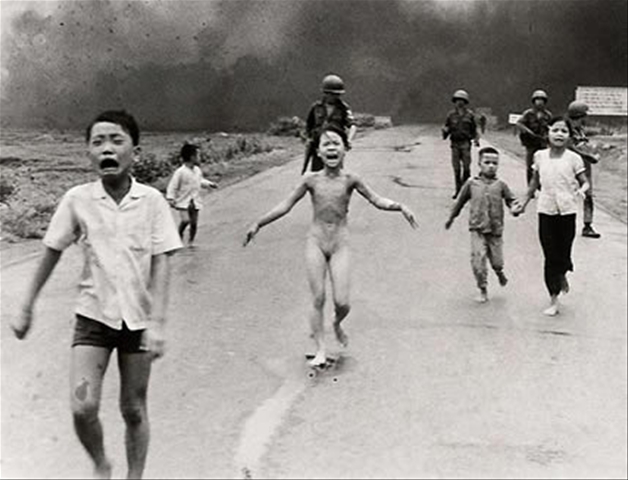
Pictures have been known to be changing the course of history, such as the one from Phan Thi Kim Phuc, the girl that ran towards the lens of Nick Ut from Associated Press, after she had been burned by napalm in Vietnam. Or the footage from "Tankman" on Beijing's Chang'an Boulevard. (In 2006, I wrote an article, "Image-ine" about those two examples on my other, China-related blog "The Crazy Insect"). They changed the perception of how the public thought about the war or conflict they were trapped in and maybe ensured that next time things will take a different course. Aisha's picture on the cover of "Time" may be joining the ranks of those pictures that clearly represented a challenge to the "business-as-usual" sort of strategy continued by those in power. The courage to do so, to have her picture taken in the way she did, is the real story and "we" have very little to do with it.

Sincerely Yours.

Saturday, July 31, 2010

The Case of World vs. Betancourt

It tends to get lonely at the top. Ask Ingrid Betancourt.

Just a mere two years ago, then probably the highest-profile hostage worldwide roughly at par with house-arrested Aung San Suu Kyi in Myanmar, Betancourt was embraced and lauded as a hero by the world when, as a result of "Operation Jaque" , she and fourteen others were rescued from the hands of her kidnappers of the FARC; now, two years later, that same world is coming down full force on her for having the audacity to require the Colombian State to pay roughly six million euro in damages to her and her family for the time she was held in captivity and for failing to protect her as a presidential candidate in 2002.

Let's get it over with: we all make some miscalculations in life and this is one truly seems epic in it's dimension, unless the implicit aim of Mrs. Betancourts' action was to commit political suicide in her homecountry, where in fact there was some speculation that after her release she might have another go at the presidency. I also find it hard to blame the Colombians that are now spitting her out because of her perceived ingratitude and hostility towards the government and army that saved her. Colombians have seen a lot of bad things happening in their scarred country and pity on a person of her standing, asking for money, is in rare supply. It's hard to judge her otherwise ... or is it ?

From a personal perspective, I wouldn't want to be in a position where I would have to judge someone who has been robbed of her liberty and dignity for a full six years, who has been tied to trees, humiliated and beaten. I invite anyone who has not gone through such an ordeal to step forward and explain how it feels and what it does to a person. Good luck to you and may the sound of my scorn be with you forever after. Therefore, more than by her claim, I am shocked by the mass of comments on newsreports that have been posted on the internet (such as here) and that are screaming murder, calling her a villain, suggesting she be returned into the hands of her FARC captors or worse ... by people who probably show signs of nervous breakdown when their computer is not responding within ten milliseconds after pushing a button.

Very revealing in many of the reports is also what is not being said, often more than what is being said and in which most of  the reports just echo each other.

I see two fundamental questions in this whole debate. First is whether Ingrid Betancourt, yes or no, as a Colombian citizen has the right to seek damage repair for what she suffered. Second is whether her claim that she was not sufficiently protected by the government when she was kidnapped makes sense or not. It needs to be said that I have never been any closer to Colombia than at a five-thousand miles distance, that I neither speak nor read Spanish, that I haven't studied the history and developed only very recently an interest in this amazingly disturbing country. Yet I still would like to voice my opinion based on the reports I have read and the reactions I have seen.

Let's start with the second issue. What happened on that 23rd of February 2002 ? Ingrid was running for president (admittedly as one of the lesser candidates for the "Oxygen Green"-Party) and had decided she wanted to visit San Vicente del Caguan  . This village was in the middle of what had been, till a few days before her arrival in the area, a so-called Demilitarized Zone (DMZ) where the Colombian government, then headed by president Andres Pastrana, was meeting with the leaders of the marxist FARC rebels to try to negotiate a peace agreement. Officially, in the DMZ there was a truce (reality seems to have sometimes been quite different). These negotiations, which had been going on at intervals over a period of almost three years, in the end didn't go anywhere and made president Pastrana decide to re-militarize the DMZ. This was what was happening when Ingrid Betancourt's campaign trail crossed the area, and as a result of the president's initiative, fighting in the area was flaring up again.

Several people in the military have laid down witness to the fact that several attempts were made to warn Ingrid to not enter the area because it was too dangerous. Strangely, what is missing in most of the articles that I have seen on the Web, is that the Mayor of San Vicente del Caguan, where most of the peace talks between the government and the FARC had taken place, was a member of the "Oxygen Green"-Party and, according to Wikipedia (the only source I found sofar that is mentioning this), at the time the only elected official of that Party in the entire country. So let me try to picture this: there is this town where for a prolonged period of time people from the highest government levels have been trying, through talks with the rebel factions, to make Colombia as a whole a safer place; this town, which has been the centerpoint of these discussions (to which Ingrid Betancourt at occasions had been part), is presided over by a fellow partymember of Ingrid ... and people would question why, on a campaign where she's aiming for the presidency of Colombia, she would want to go there ??? Either my information is not correct, or someone must be kidding me ...

The story could be even more interesting, though also this fact is only hinted at in very few of the articles I have read. It seems that at the time Pastrana himself was flying into San Vicente del Caguan, that Ingrid had asked him to hitch a ride on his plane and that the president refused because he had refused two other requests of other candidates before her. From a Pastrana perspective, I am not saying I can not understand that decision. For him, it might have been a matter of fair-play: either everybody or no-one. I have absolutely no view so far on the personal relation between these two politicians, and whether that might have played a role in denying Betancourt's request. What I do know is that for me Ingrid Betancourt had a legitimate reason to want to go to that place. One of the commenters, under the name Juancho Colmenares, on the excellent blog "Colombia Reports" (to which I am much indebted for writing this article) voices what I was thinking when digging into this story in a pretty accurate and colourful way:

If a man would do the same thing Ingrid did, it would be said that he is “macho” that he has “cojones” that he has his pants “well belted” that he is strong that he is an example of firm will

I think he is right. Let's compare for a moment to the previous US presidential election . What was McCain doing in Iraq during the campaign ? Had the GPS system on his bus gone bust ? Had he any voters over there to convince ? Could he have any impact on the situation there ? Don't think so. I bet the official explanation was that, as a candidate running for president, it was necessary to get in touch with the issues he would be facing as a president if he ever were to be elected and that it had to be done on the ground, instead of having a video-conference from Washington with the generals leading the operations in Iraq at that time. Truth is: seeing a guy walk a (suggested) mine-field without a bullet-proof vest (never mind the one hundred soldiers, the three Blackhawks and 2 Apache gunships that, unfortunately, didn't fit in the frame of the camera) is a great photo-op and is very, very macho. Cojones, yes. I didn't hear too much clamor about McCain's visit and never mind the money that must have been spent to get the guy there in conditions safe enough to make that bulletproof vest obsolete.

I wouldn't want to underestimate Ingrid Betancourt's ego. From what I've been reading in some comments, it seems it would almost require Saint-Peter's cathedral to fit in. I don't know, I haven't met the lady. Yet I believe she had a point in wanting to go and be at San Vicente at that time. She had only one "beacon" of her Party in the entire country to refer to and with the re-militarization of the area, life over there was bound to become much more unpleasant again. She had the right -I'll stop short from saying "the duty"- in my eyes to go and support the Mayor (and the citizens) of San Vicente del Cagaun  and tell them that with her as a president they wouldn't be forgotten and they would be taken care of. Yet the right to do that under as safe conditions as possible (meaning, by plane or helicopter) is her denied. She insists, notwithstanding the multiple warnings, and attempts to drive there by car, accompanied by her campaign manager Clara Rojas and some other people. About thirty miles into the danger zone, she gets stopped at a roadblock set up by the FARC, they recognize her and she and Clara get driven off into the jungle ... from where she won't emerge for another six years, thanks to  a risky operation set up by the government and the army: let me by all means not fail to stress that point again.

Based on this course of events, I think any government could at least take the trouble to do some introspection and consider whether it had done enough to protect the safety of anyone who was in the race to become the next president of Colombia. Sure, Ingrid Betancourt must have been aware of the danger in entering that area, but what I'm wondering is whether the situation there was really so much worse than in the rest of pre-Uribe Colombia (Alvaro Uribe Velez won the elections in 2002 and in the next eight years managed to make the country a much safer place). What is the image you are projecting when you fail to stand by your people who are in the crossfire ? Politics is a hard-ball game and it is played dirty. Ingrid, I have no doubt, had in the first place her own presidential cause in mind when she forged forward with her plan but I am sure any politician, worthy of that name, would have tried the same had he been in her shoes.

And then there is the other side to look at this: if the zone around San Vicente was really dangerous to the extent that no guarantee could be given that one would get out unharmed, wasn't it then the responsibility of those in charge to simply prohibit anyone from entering there? Under such circumstances, anyone, be it commoner or presidential candidate, is just a liability to those who have to manage the conflict on the ground.

No matter where Betancourt's claim might have gone had she not chosen to retract it of her own, it might be good for the government to at least spend a few moments on the question whether there is not some rationale in the claim and what should be done to avoid it from happening again. For this is not just Ingrid Betancourt's problem: it is one person turning into a colossal PR problem for the entire country for years on a row, as the world is watching and scratching it's head about how the hell in country C a presidential candidate can go missing for such a long time. And honey, shall we take the kids and spend our next holiday over there ? Naaah, don't think so, darling ... maybe in twenty years or so.

Now coming back to the first issue, whether Betancourt has the right, in a legal sense, to claim damages for her suffering. Interesting point again is that most of the articles seem to indicate that she had sued the State. Technically she didn't do that: she tried, through conciliation, to settle outside the Court. If her conciliation request would have resulted in a rejection, the next step could have been bringing a lawsuit against the State to Court, but as we know now, matters will never get to that point, as she retracted her claim. Being anything but an expert on Colombia and it's institutions myself, it is hard to judge whether, hypothetically speaking, her claim would have stood any chance. From what I read, the country has in place a victims law, which allows victims of illegal armed groups to claim reparation by the State. The government indeed seems to have paid repairs already in the past to kidnap victims who were considered to have not been adequately protected by the authorities.

The broader question is of course whether the government can be held liable for misdeeds it didn't commit. I would be inclined to answer no, but I certainly would not go as far as to turn down the responsibility towards the victims entirely. On an even broader level, I believe the society as a whole has a responsibility towards these victims, for an army of some ten thousand rebels can not continue to wreak havoc on an entire country of over forty million people -for decades now already- if that society is united in it's will to rid itself of them. I see it as the government's job to guide and steer society in such a direction that it will unconditionally cooperate to smoke out those festering elements, failing of which to reach such a result in the short term, as a stopgap solution it should try to repair as much as possible the harm done to whichever victim seeks it's help. The funds to do that could be organized as are the welfare and pension funds in most developed countries, meaning based on the solidarity-principle: the healthy contribute for the sick, the young for the old and when you get old yourself, you know someone of the new generation is paying to take care of you. That might rid us of this hypocritical cry that echoes from everywhere in those comments I've been reading: "Why should we pay for her with the tax-payers' money ?" Well, for one reason, because in a country like Colombia where the shadow of FARC, paramilitaries and narco-gangs still looms large, you could be next.

So was Betancourt's claim justified ? I think it was. Was it outrageous ? Probably. She admitted readily to that herself. But it would have been in the interest of everyone to have the proper institutions deal with her claim and either bring it down to reasonable proportions (but in this context, what is reasonable ? How much money is six lost years of your life worth ? Just for comparison reasons: I would be very interested to learn how much Brangelina are suing that magazine for that wrote they are discussing divorce. I think saying that we're possibly in the same order of magnitude might not be very far off the mark) or dismiss the request altogether based on such and such reasons strongly funded in the Law and constitutional rights.

By unilaterally retracting her claim when the voices of protest started shouting at her, Ingrid Betancourt may have done her fellow citizens that are still in captivity or will fall into rebel hands in the future, a great disservice, for the message has just gone out now that it is bad, outrageous even, to even dare to ask for compensation. Where the democractic instutions seem to have done a perfect job in preventing outgoing president Uribe to run for a third term (which would have been in violation of the Constitution) and thus allowed a (generally speaking) fair election process to take place, they seem to have failed in this case, silenced by the vox populi.

The morals of Ingrid Betancourt's action towards her saviors in the face of the massive effort and risk undertaken to restore her to freedom, may be questionable, but so is any effort that was taken to prevent this case from taking it's natural legal course through the appropriate institutions.

Pity. Really pity.

Sincerely Yours,

Tuesday, February 09, 2010

"Burn it Blue": some thoughts on Frida Kahlo

There's two movies I will always remember, both for the same reasons: the colors and the music.

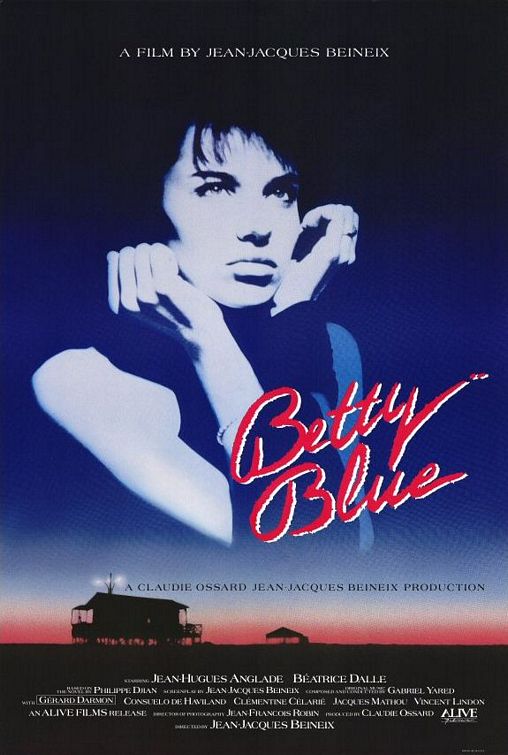
The first one is "37°2 Le Matin", also known as "Betty Blue", a movie by French director Jean-Jacques Beineix, about spare-time writer Zorg, who happens to meet Betty. The young lady is so enchanted by the scribblings from Zorg that her only concern  from then onwards is to get them published, leading to her insanity when that turns out to be more difficult than planned. The scenes where the couple meet and set out to start painting holiday bungalows on a beach, in pink and blue, are among the most amazing views I have ever come across in cinema. Those are scenes you don't forget, only by virtue of the colors and the rather fantastic minimalist score of Gabriel Yared.

The second one is "Frida", directed by Julie Taymor and starring Salma Hayek, about the life of Mexican artist Frida Kahlo. A significant part of her life she spent in the "Casa Azul", the house where she lived and which is a museum dedicated to the artist now. The vibrant blue, red and green colours of the house, like the colours of Kahlo's paintings, seem to splatter off the screen and watching it while listening to the grandiose wrinkled voice of Chavela Vargas in "La Llorona" or Caetano Veloso in "Burn it Blue" is another cinematic experience I'm not likely to forget anytime soon. And because of the movie, I got interested in this woman, who at times seemed to combine the superhuman with the everyday, down-to-earth normal human ...

So a couple of weeks ago I was happy to find, in a bookstore nearby, this little pocket book by French Nobel laureate Jean-Marie Gustave Le Clézio "Diego and Frida" ("Diego et Frida" (1993) published by Gallimard, "Folio", "Editions Flammarion", Paris), which details out the life and times of Frida Kahlo and focuses in particular on her stormy relationship with her just as notorious husband, Mexican revolutionary muralist Diego Rivera. It's near to impossible to not be touched by the story of Frida and Diego as it is laid out in the book, so I guess next I will be looking for the official biography of Frida Kahlo by Hayden Herrera (on which book the script of the movie was based), but while doing some further browsing on the web, I found this quote from Diego Rivera which struck me:

"Frida is the only example in the history of art of an artist who tore open her chest and heart to reveal the biological truth of her feelings. The only woman who has expressed in her work an art of the feelings, functions and creative power of woman".

When one isn't familiar with the sort of paintings Frida Kahlo produced, this may sound a bit over the top, but one look at some of her work reveals immediately what it is Diego was talking about when he referred to "the biological truth of her feelings".

Frida wasn't meant to live as long as she has, even be it only forty-eight years, but still she did. Diagnosed with polio at age six, which left her right leg thinner than the other, the major defining disaster of her life, however, was an accident she had when she was eighteen:

"On September 17, 1925, Kahlo was riding in a bus when the vehicle collided with a trolley car. She suffered serious injuries in the accident, including a broken spinal column, a broken collarbone, broken ribs, a broken pelvis, eleven fractures in her right leg, a crushed and dislocated right foot, and a dislocated shoulder. An iron handrail pierced her abdomen and her uterus, which seriously damaged her reproductive ability." (Wikipedia)

Incredible as it may seem, Frida recovered. She left the hospital just one month after she had been brought in, but for the rest of her life she would remain confined in the realm of sometimes excruciating pain as a consequence of her accident, pain which couldn't be resolved despite the thirty-five operations she had during her life. During her long revalidation at the house of her parents, where she was almost litterally harnassed to the bed, what started as a way to fight boredom and loneliness and waves of despair would ultimately become the instrument through which she faced the world and what brought her fame: painting. Her mother bought her a mirror which hung over her bed so Frida could see the subject she would keep reproducing on canvas during the rest of her life, which was herself. Yet, the acquaintance with Frida Kahlo's work is not an easy one, for her universe is not something a lot of people can relate to. It does make crystal clear though what her husband had in mind when he referred to the biological truth of her feelings and "The Broken Column" (La columna rota, 1944) is one of the best examples.

This portrait of a bare-breasted Frida, weeping, stuck with nails all over her body, harnessed with strips of cloth and chest torn apart to reveal that broken spine, represented as a column from a classic Greek temple, is the biggest endorsement of the truth of her husbands' words. For this self-portrait, she let go of her usual elaborate Tehuana costumes in which she normally dressed and let her hair hang down, as if to strip herself of any adornment and make-up and just to show her pure self and what it was she was hiding inside. But although everything in this painting shouts pain -even the landscape is torn up and shredded- yet the woman still  manages to appear beautiful and composed. The spine, or the "column", may be broken in pieces, but it is just as well intact and supporting Frida in holding her head up high. The whole drama and personality of this amazing woman is converging in this single image, the intensity of which, though in a totally different fashion, I could only compare to "The Scream" by Edvard Munch.

Through paintings like these, she made her entire life an exploration of the "self" and of that self's interaction with the outside world, especially with Diego, whom she called the "second disaster in her life", but with whom she choose as well to spend the better part of her life and on whom she feeded for her art, her communist activism and her personal feelings.

Her body eventually gave in, on July 13 1954, in the "Casa Azul" where she was born. As Le Clézio writes in his book, Diego never went back to Coyoacan after Frida's death. He  loathed the idea to have it become a museum, as he wanted it to be an open place, a sanctuary to the memory of his wife whom, notwithstanding everything that had happened between them (Diego may have been the only man ever to be diagnosed by his doctor to be "physically incapable of monogamy"), he had deeply admired and loved even more. Everything in the house, which did become a museum after all, is motionless, holding it's breath while awaiting the possible awakening of the niña.

Frida went, leaving behind on the last page of her diary the words "Espero alegre la salida - y espera nunca volver" (I hope my parting will be happy - and I hope to never return). With the legacy she left, she doesn't have to return: she is just here to stay.

Sincerely Yours.


Friday, September 18, 2009

Aristotle for Afghanistan

Remember Umberto Eco's masterpiece "The Name of the Rose" ?
Remember that book about a book that allegedly never existed, while for others it merely went missing ?
The second book of the "Poetics" by Aristotle.
The one that was supposed to have dealt with "Comedy" ...

Have you never had the feeling these last ten-something years that the plot of this novel was played out in real life -hic et nunc- albeit it in, for most of you whoever will read this piece, a far different and distant place on this earth ?

The venerable Jorge had been guarding the book in the famous labyrinth of the library to keep it from the eyes of his fellow brethren, for fear that laughter would distract the attention that is due to God and to God only ... like the Taliban have tried to subdue laughter in Afghan society for it distracts attention from Allah. The old Jorge and the Taliban: all "scholars", yet so afraid of the power of words.

We all have witnessed, maybe some in the field, most from behind our screens and magazines, how this fear has worked out and has been translated in the extremist islamic rule by the Taliban before the US invasion in 2001. It was a rule of terror, based on an impossible number of prohibitions and most poignantly, reducing the status of the Afghan woman in society to something devoid of any respect for human dignity.

The US invasion in Afghanistan to overthrow the Taliban was probably the first and only war I wholeheartedly supported, because it promised, even if only as a side-effect of the real goal, which was going after Al-Qaeda, to redress a wrong against women that was almost intolerable even just to read or hear about, let alone having to live it. Because of this reason, I have kept believing in the justification for this war almost till this very day, but seeing this footage finally has made me seriously doubt.

For those who want to watch this part of the documentary, I have to put a strong disclaimer that there are some very graphic images being shown. The overall message is clear: life has not gotten better for Afghan women since the invasion, except maybe for some women in the major urban areas, but oppositely may have gotten worse as a result. As one of the interviewed is saying, under the Taliban, women had no rights and had to stay in their house and wear burqua's on the rare occasions they could come out; now they still have very limited rights, they still mostly stay in their houses but on top of that they now live in a war-zone and women are always disproportional victims in war-zones. Furthermore, self-immolation by Afghan women has seen a steady increase in numbers, it is said.

So where does that leave us ? If what this documentary shows is true, and I have no reason to doubt it, the major moral premisse for protracting this war, is just not there. It's not happening: women are not being empowered by the actions of the western allied forces. Worse: now even their western-backed leader, Hamid Karzai, is signing into law a proposal that does nothing less than justify rape within a marriage. It is becoming increasingly clear that we absolutely need to rethink Afghanistan in the West. Maybe we shouldn't have been there in the first place: had the US not backed the Mujahideen, which eventually evolved into the Taliban, as opposition to the Russian forces that held the country occupied in the eighties, there might not have been the current quagmire.

Yet what options do Afghan women face ? Continue living in a war zone for probably years to come, however with the intent to restore some sense of normalcy and returning them at least some of their human rights in the long run, or delivering them again in the hands of the Taliban, these venerable "scholars" who blast up schools and throw acid over young girls faces if they attempt for some education in one of those schools. The choice is more than heartwrenching.

If there's anybody who has got a copy left of the second book of the "Poetics", the one on "Comedy", by Aristotle, hidden somewhere deep down in his cellar, would he please bring it out and start mass printing it, such that laughter, even in Afghanistan, may not be lost for good once that other remaining copy is eaten by the fire in that labyrinth of the library of those that proclaim to be the true followers of Allah ?

Sincerely yours.

Sitemeter